.png)
March 5, 2026

5 Minute Read

.png)
March 5, 2026
5 Minute Read
Many traders struggle not because they lack knowledge, but because emotions interfere with their decision-making. Even with a clear trading strategy, fear, greed, and hesitation can cause traders to deviate from their plans. Emotional trading often leads to inconsistent results, overtrading, and unnecessary risk. Automation helps solve this problem by ensuring trades are executed according to predefined rules rather than emotional impulses.
When traders manually execute trades, emotions naturally become part of the process. After a loss, fear may prevent them from taking the next valid trade. After a win, confidence may turn into overconfidence, causing them to increase risk unnecessarily. These emotional reactions often lead traders to abandon their strategies at the worst possible moments.
Emotional trading also causes inconsistency. A trader may follow their plan perfectly one day but ignore it the next. This inconsistency makes it difficult to evaluate whether a strategy actually works.
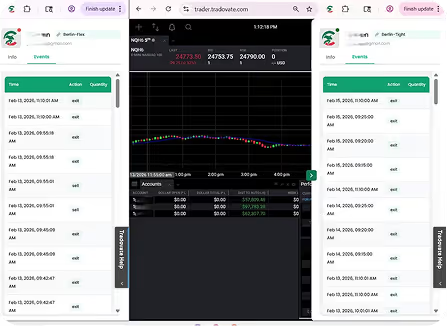
Automation removes emotional interference by following rules exactly as programmed. Entry points, stop losses, and profit targets are executed without hesitation or second-guessing. This ensures that the strategy is applied consistently across every trade.
By removing emotional decision-making, automation helps traders stick to their plan even during stressful market conditions.
Consistent execution allows traders to evaluate their performance accurately. Instead of wondering whether emotions affected their trades, they can analyze real data and refine their strategy accordingly. Over time, this leads to better decision-making and improved trading outcomes.
Automation does not replace the trader—it simply protects the strategy from emotional mistakes. With disciplined execution, traders can focus on improving strategy rather than fighting their own psychology.

Disclaimer : Trading in financial markets involves risk and may not be suitable for all investors. Craft Trading does not guarantee profits or specific trading results.